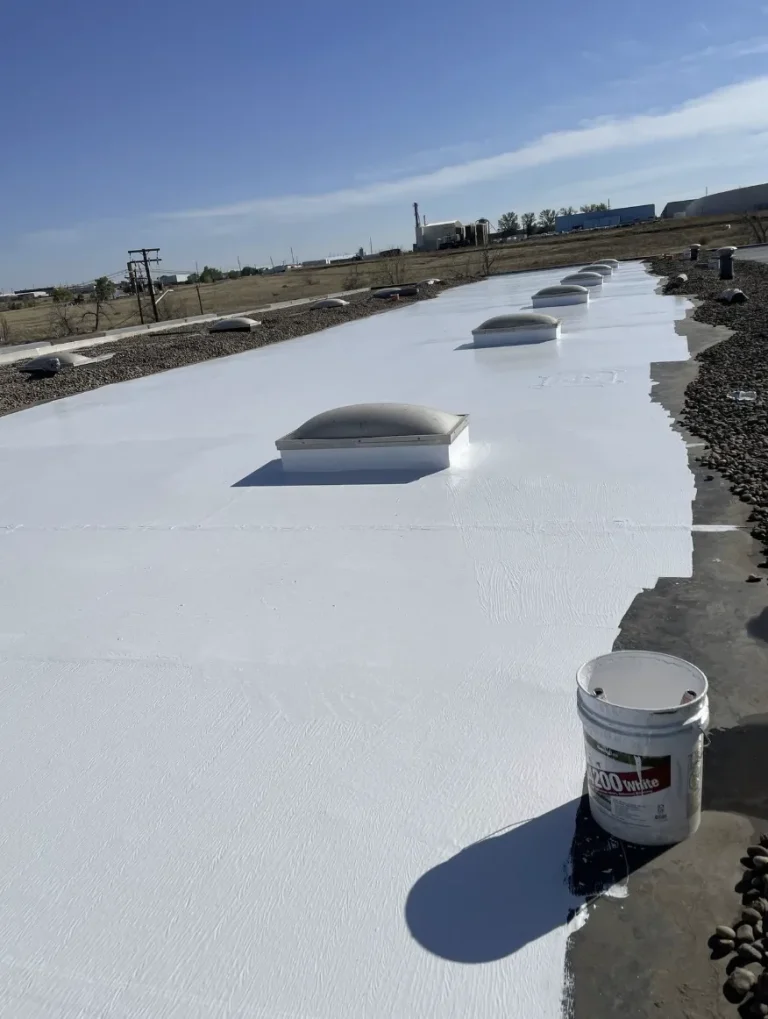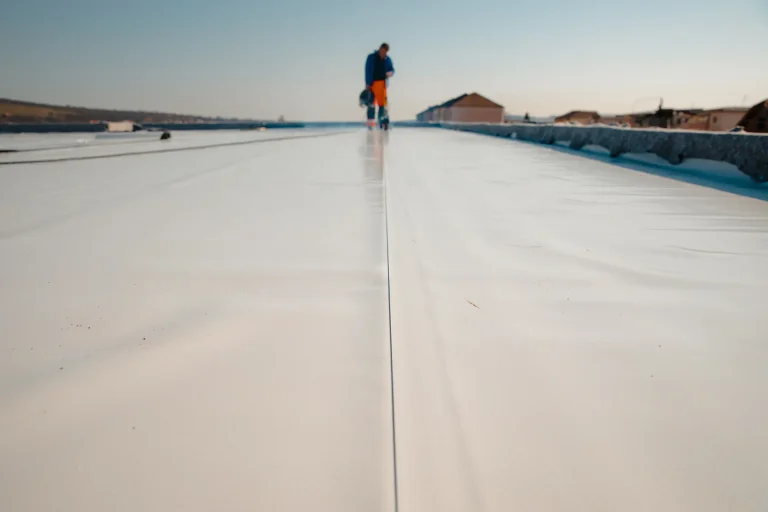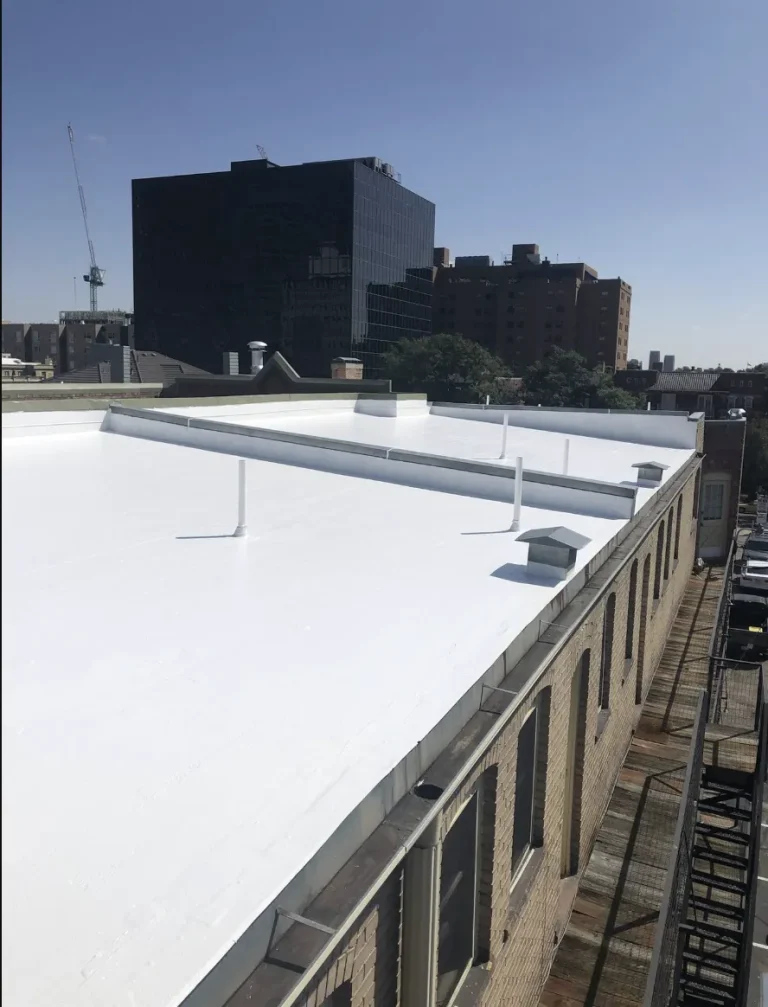
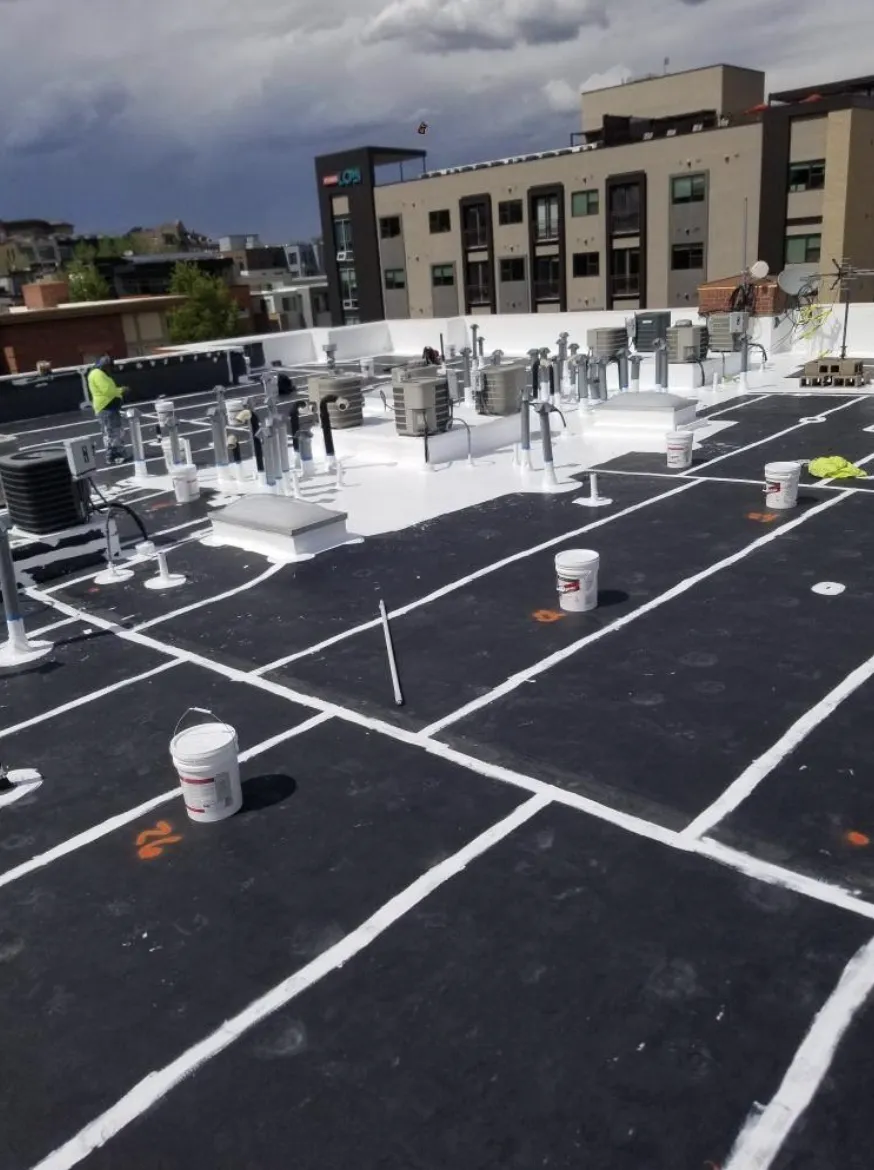
The clearest signs your flat roof needs restoration are surface wear that has not yet become structural failure: chalking or cracking membrane, open or lifting seams, ponding water, worn flashings, blisters, and recurring small leaks. Caught early, many of these can be repaired and the roof restored with a coating instead of replaced.
This checklist is written for property managers and building owners with commercial flat roofs and low-slope roofs in Colorado.
What Does Flat Roof Restoration Mean?
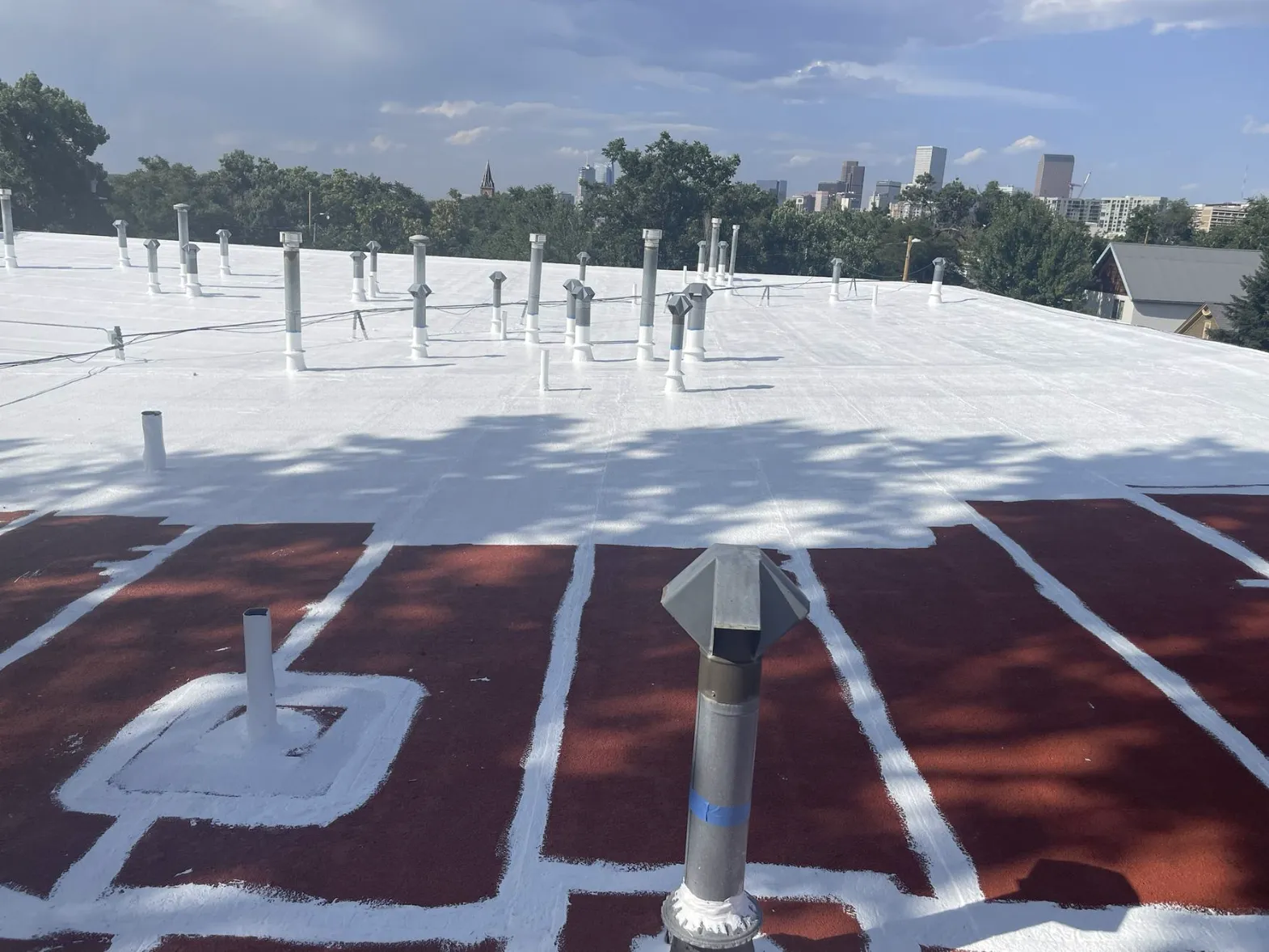
Roof restoration means repairing and protecting an existing roof so it keeps performing, rather than tearing it off. A typical restoration includes cleaning, repairing seams and flashings, replacing wet insulation where found, priming if needed, and applying a fluid-applied coating. You can see how that process works on our commercial roof restoration page.
9 Signs Your Flat Roof Needs Restoration
1. Ponding water that lingers
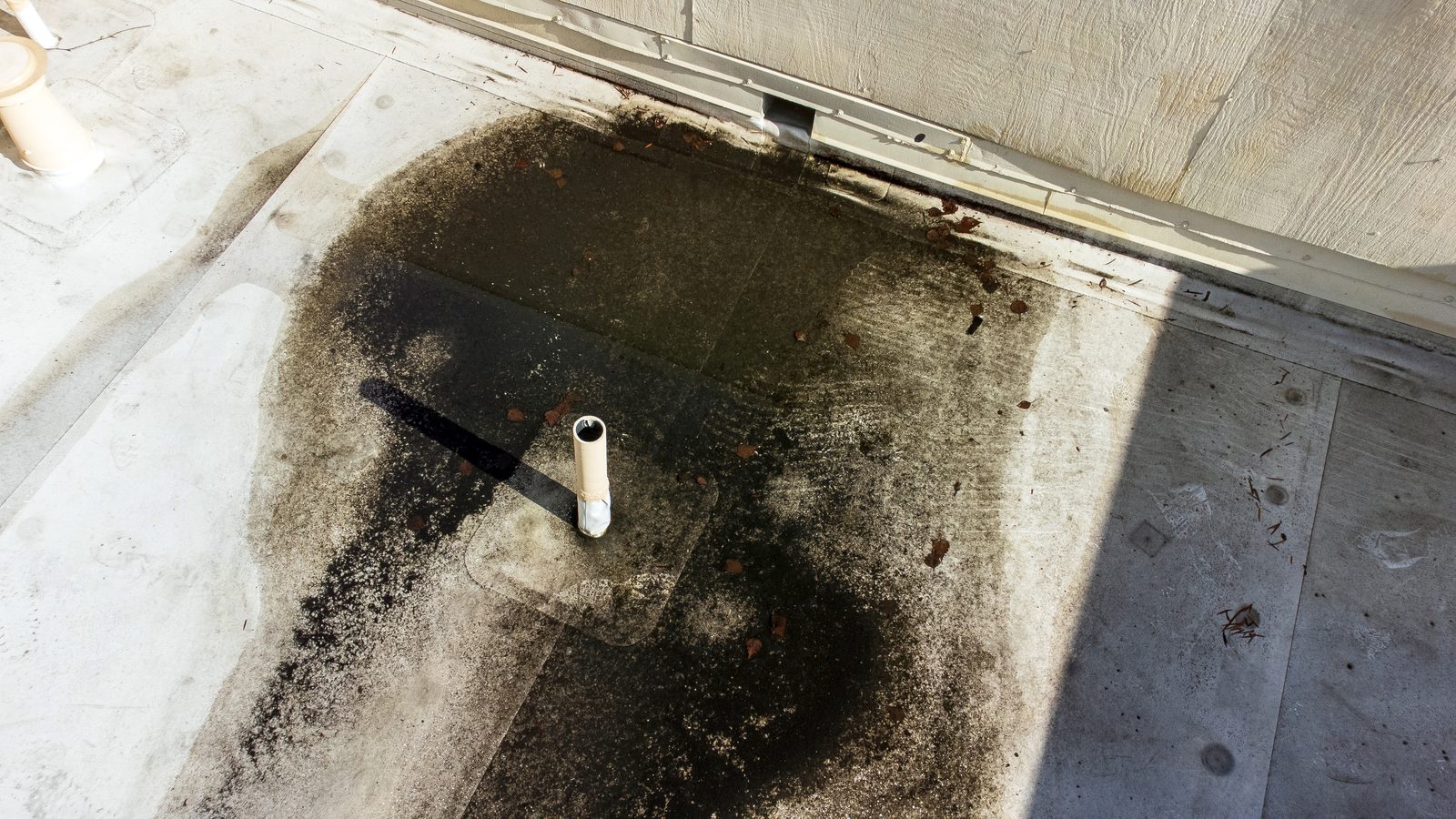
Water that sits on a low-slope roof long after rain adds weight, accelerates membrane wear, and finds any weak spot. Note where it collects and how long it stays.
2. Open, lifting, or brittle seams
Seams are a common leak point on single-ply and modified bitumen roofs. If you can see edges lifting, gaps, or failed seam tape, they need attention before coating.
3. Chalking, oxidation, or surface cracking
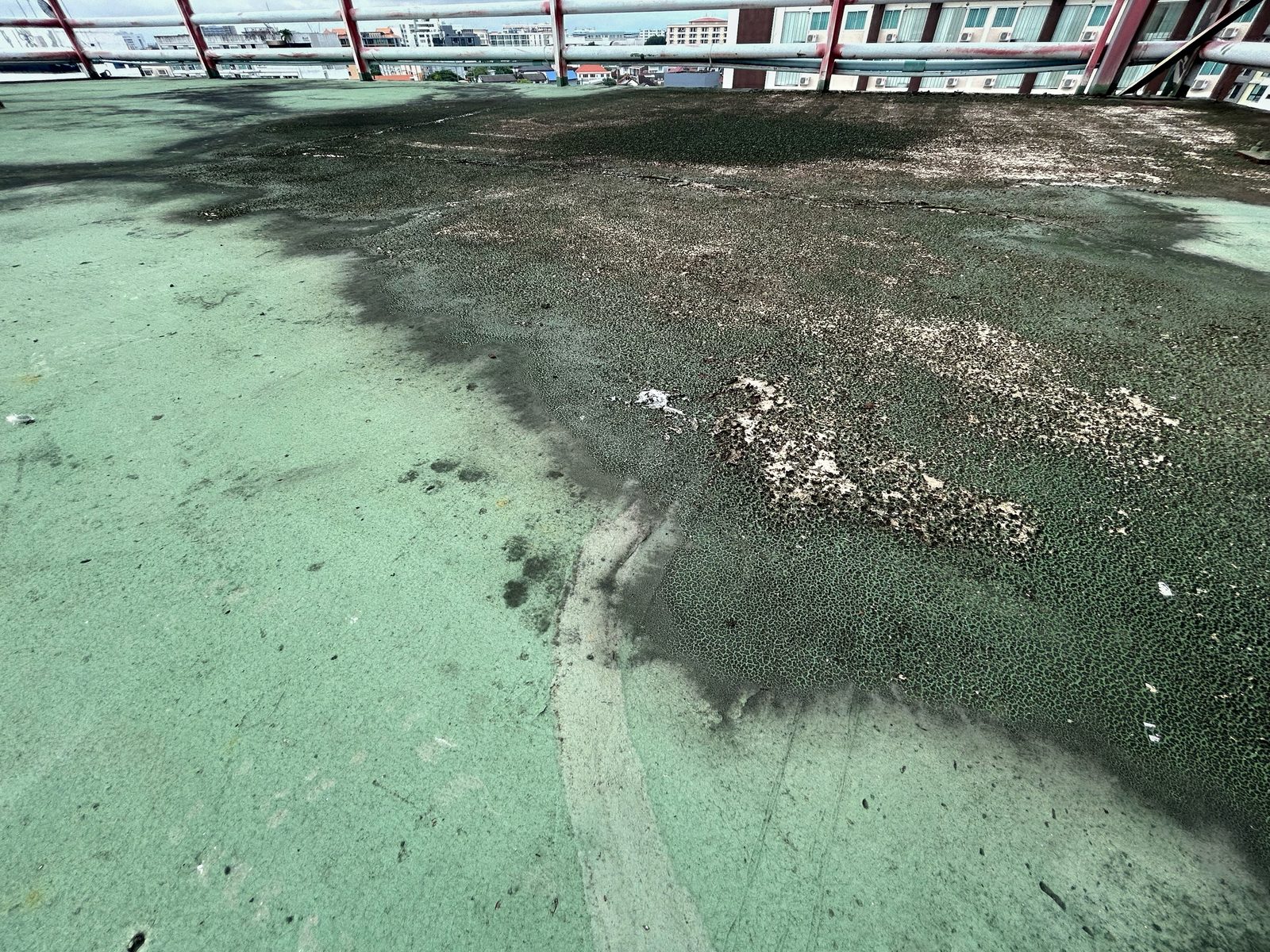
Aged membranes can turn chalky, crazed, or alligatored as UV breaks down the surface. In Denver and along the Front Range, high-altitude sun accelerates this.
4. Blisters and bubbles
Blisters can indicate trapped moisture or adhesion loss. Small isolated blisters are often repairable. Widespread blistering needs a moisture investigation.
5. Worn or separated flashings
Flashings at parapet walls, curbs, and edges move with temperature swings. Separation, cracking, or missing sealant around them is an early warning.
6. Leaks or stains inside the building
Ceiling stains, damp insulation, and drips after storms rarely fix themselves. Track where and when they appear to help pinpoint the source.
7. Granule loss or exposed reinforcement
On cap sheets and modified bitumen, bare spots or visible scrim mean the protective layer is wearing away.
8. Hail bruising or punctures
Colorado sees frequent hail. NOAA’s National Severe Storms Laboratory notes that Nebraska, Colorado, and Wyoming usually have the most hailstorms (NOAA NSSL). After a significant storm, have the roof checked even if there are no leaks yet.
9. Rising cooling costs or a hot top floor
A dark, aged roof absorbs heat. The U.S. EPA notes that buildings with cool roofs use less air conditioning and have more comfortable indoor temperatures (EPA). A reflective coating may help, though results vary by building.
Restoration, Repair, or Replacement?
| What you see | Usually means | Typical next step |
|---|---|---|
| One or two isolated leaks, sound membrane | Localized problem | Commercial roof repair |
| Widespread surface wear, mostly dry insulation | Restoration candidate | Restoration with coating |
| Saturated insulation, deck damage, widespread delamination | Roof system failure | Replacement evaluation |
The deciding factor is usually moisture in the insulation. That is why an inspection with a moisture survey comes before any recommendation. For a deeper comparison, read roof coating vs replacement.
What to Do Next: A Step-by-Step Plan
- Walk the roof safely or have a qualified professional do it. Use fall protection and follow OSHA rules for roof access.
- Photograph problem areas: seams, drains, flashings, and ponding spots.
- Note interior leak locations and dates, especially after storms.
- Schedule a professional inspection that includes a moisture survey.
- Ask for a written scope that separates repairs from restoration so you can compare bids.
- Plan maintenance with inspections in spring and fall and after major hail.
Why Timing Matters
Restoration depends on having enough sound roof to restore. Each season of delay can let more water into the insulation, which can push a roof from coating candidate to replacement. Addressing small problems early protects the option to restore.
How quickly Colorado Roof Coating Company can schedule assessments: FACT NEEDED: CRCC assessment scheduling and response time – Lorem ipsum dolor sit amet.
Signs That Are Easy to Miss
Some warning signs do not look dramatic, so they get overlooked during busy seasons:
- Sealant that has shrunk or cracked around pitch pockets, pipe boots, and curbs.
- Debris around drains that slowly raises the waterline after each storm.
- Rust streaks on edge metal or coping, which can mean water is getting behind it.
- Condensate lines from rooftop units dripping directly onto the membrane.
- Foot-traffic wear around HVAC units where technicians walk repeatedly.
- Patches on top of patches, which suggest an area keeps failing and needs a better long-term fix.
None of these alone means the roof is failing. Together, they show a roof that is asking for attention.
How Property Managers Can Build a Simple Roof Record
A basic record makes every future decision easier and helps any contractor give you a more accurate recommendation:
- Keep a roof plan with the location of drains, units, and past repairs.
- Store dated photos from each inspection in one shared folder.
- Log every leak report with the date, weather, and interior location.
- File warranties, repair invoices, and inspection reports together.
- Review the record each spring before budget planning.
Tenants and maintenance staff can help by reporting stains and drips right away. A quick report after a storm often saves a much larger repair later.
Frequently Asked Questions
How do I know if my flat roof needs to be replaced or restored?
If the deck is sound and insulation is mostly dry, restoration is often possible. Widespread wet insulation or structural damage usually means replacement. A moisture survey answers the question.
Is ponding water on a flat roof normal?
Small amounts that evaporate within a short time after rain are common on low-slope roofs. Water that lingers should be evaluated because it speeds wear and can signal drainage or structural issues.
Can a roof with blisters be coated?
Isolated blisters are typically cut out and repaired before coating. Widespread blistering needs investigation first.
How often should a commercial flat roof be inspected?
Many roofing professionals recommend inspections at least twice a year, typically spring and fall, and after major storms. See our commercial roof inspection checklist.
Does insurance cover hail damage to a flat roof?
Coverage depends on your policy. Document damage promptly and review your policy with your insurance agent.
The Bottom Line
The signs your flat roof needs restoration usually show up on the surface first. Acting while the roof is still sound keeps restoration on the table and helps avoid a full tear-off.
See any of these signs on your roof? Request a Free Roof Assessment and we will document what we find. We serve Denver, Colorado Springs, and communities across Colorado.
Cited Sources
- NOAA National Severe Storms Laboratory, “Severe Weather 101: Hail”: https://www.nssl.noaa.gov/education/svrwx101/hail/
- U.S. Environmental Protection Agency, “Using Cool Roofs to Reduce Heat Islands”: https://www.epa.gov/heatislands/using-cool-roofs-reduce-heat-islands
- National Roofing Contractors Association (NRCA): https://www.nrca.net/