FACT NEEDED: Phone – Lorem ipsum 000-000-0000
FACT NEEDED: Business hours – Lorem ipsum dolor sit amet
Serving commercial properties across Colorado
Free Roof Assessment →FACT NEEDED: Phone – Lorem ipsum 000-000-0000
FACT NEEDED: Business hours – Lorem ipsum dolor sit amet
Serving commercial properties across Colorado
Free Roof Assessment →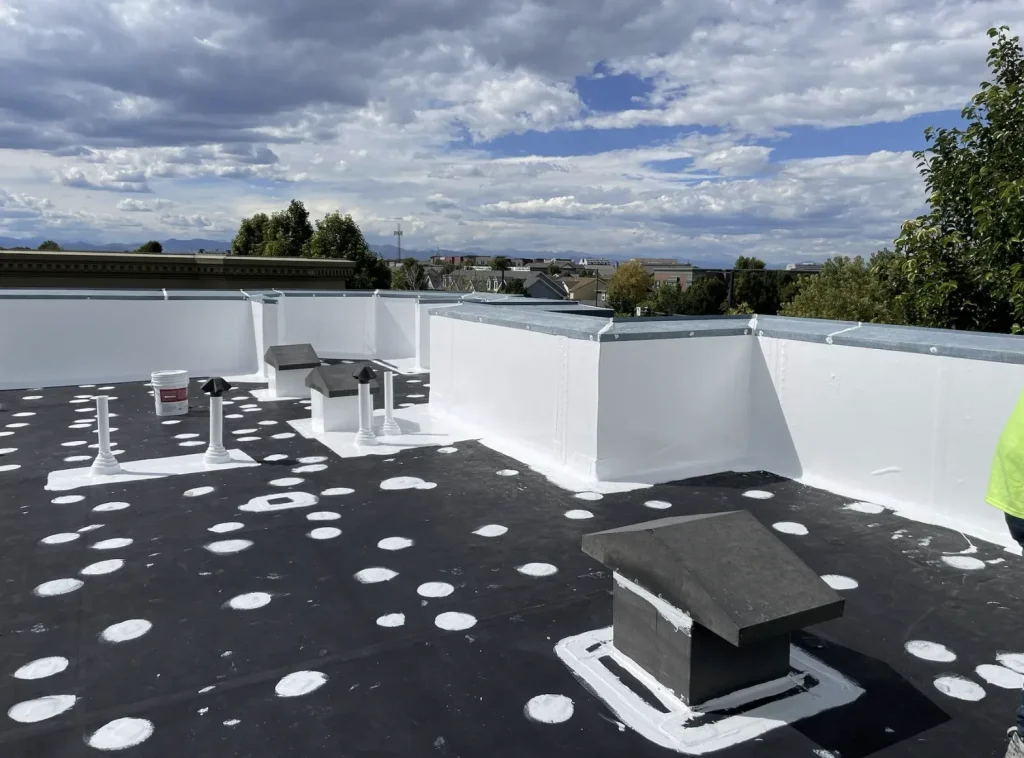
Black EPDM rubber holds up for years, then starts to shrink, chalk and pull at the seams. Coating it the right way — clean, prime, then coat — seals the roof and turns a heat-absorbing black surface into a reflective white one.
Get a Free EPDM Roof AssessmentChalking and surface wear
UV exposure slowly breaks down the top of the rubber, leaving a powdery residue. Coatings won't bond to it unless it's cleaned off and the right primer is used.
Shrinkage and pulling at the edges
As EPDM ages it can shrink, pulling at flashings, corners and penetrations and stressing the seams.
Seam and lap failures
Adhesive and tape seams can dry out and open up. These need repair before any coating goes on.
Ponding water
Low spots hold water after storms. Silicone coatings are often specified where ponding is a concern.
1
Wash the roof to remove dirt and chalked rubber.
2
Re-secure open laps and failing flashings; reinforce with fabric where needed.
3
Apply an EPDM-compatible primer so the coating bonds to the rubber.
4
Apply the base and top coats to the specified thickness.
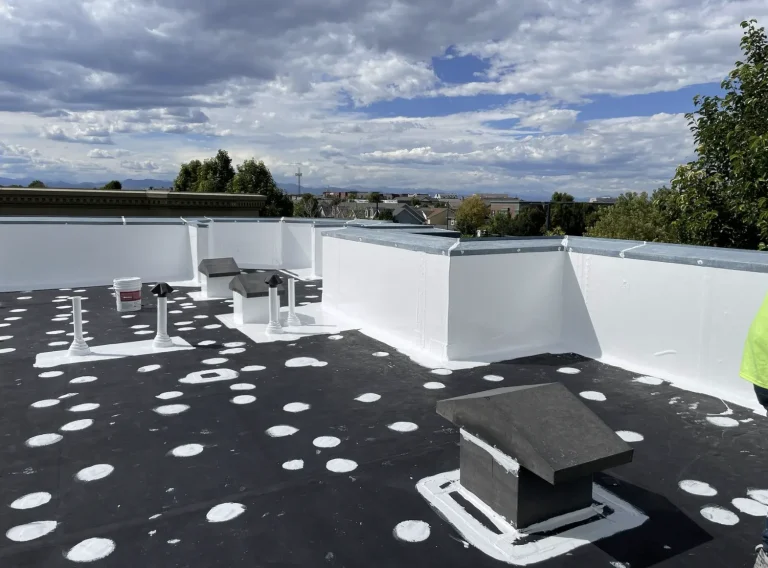
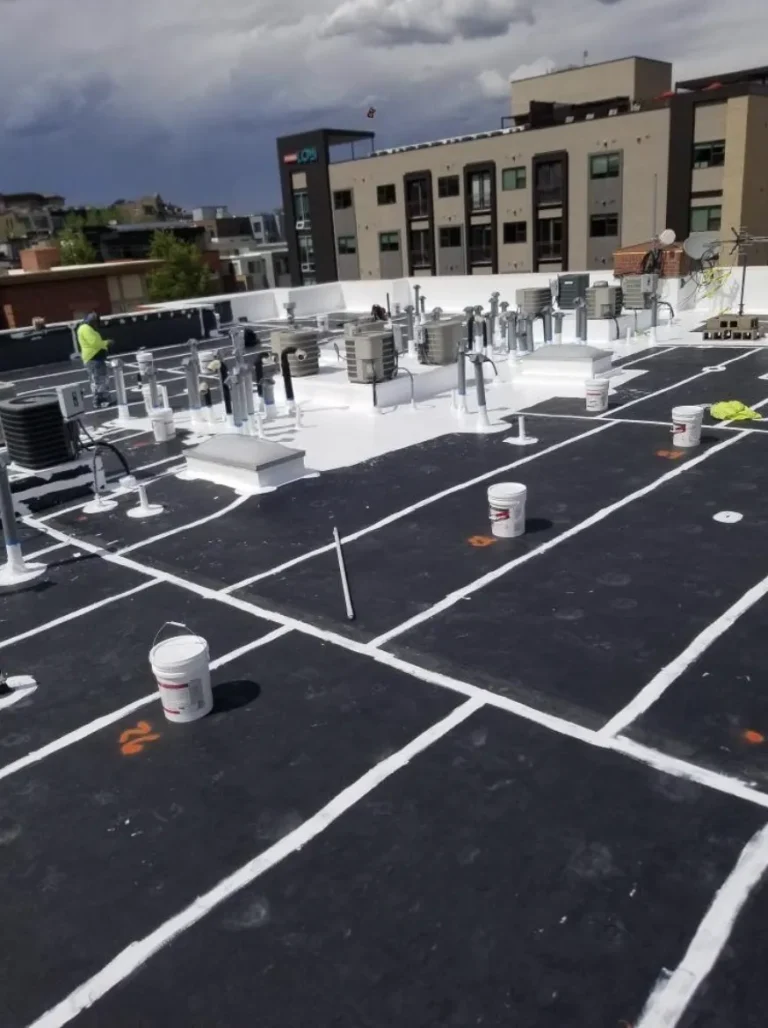
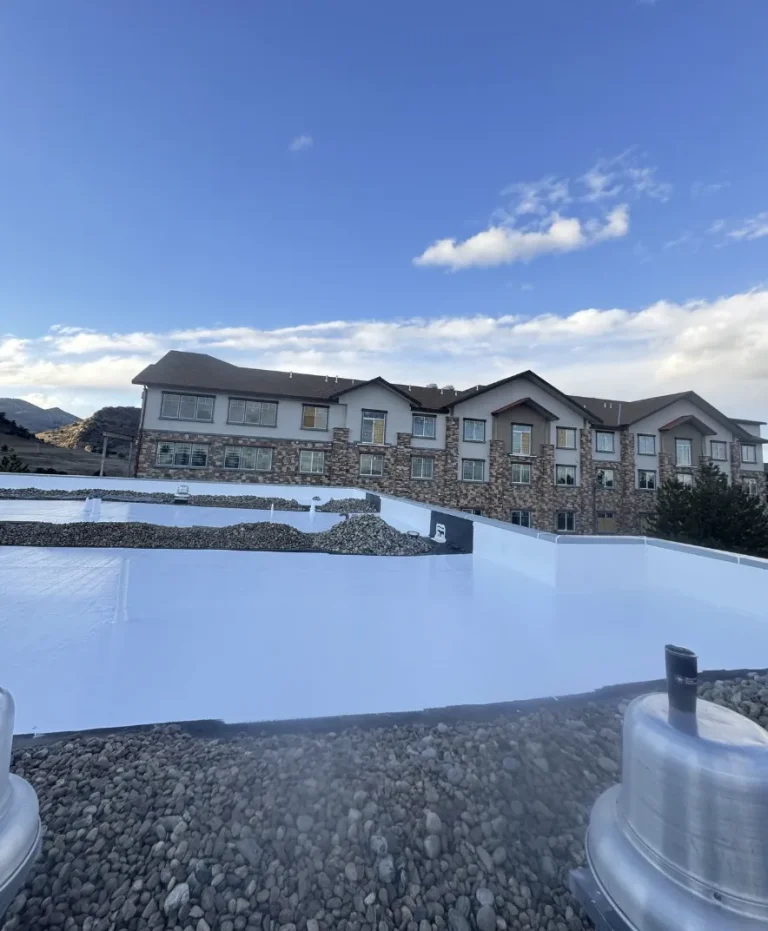
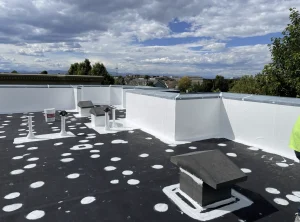
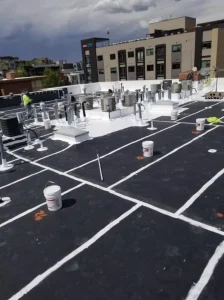
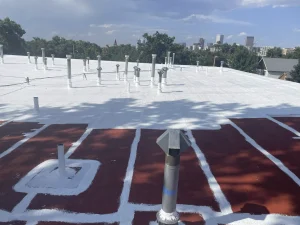
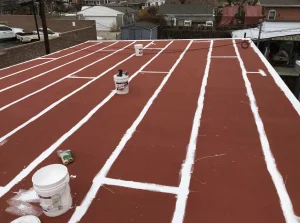
FACT NEEDED: Before/after pairing for this page – Lorem ipsum: confirm which photos are EPDM jobs
A white coating reflects sunlight that black EPDM would absorb.
No laps or tape seams on the finished surface.
The existing rubber stays in place instead of going to the landfill.
We'll check the rubber, seams and insulation and tell you if coating makes sense.