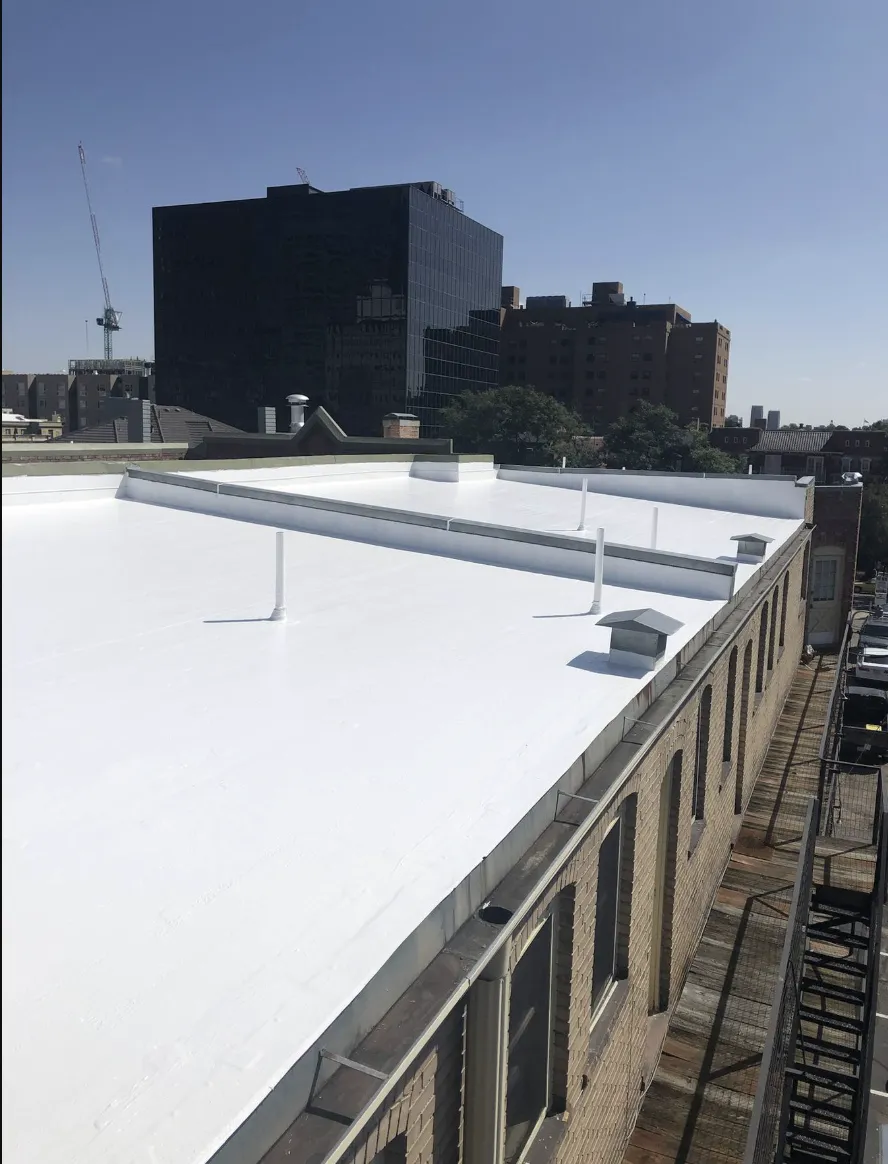
Colorado hail damage on a flat roof is often subtle: bruised insulation, cracked coatings, fractured seams, and punctured membranes that may not leak right away. Add intense high-altitude UV and frequent freeze-thaw cycles, and commercial flat roofs along the Front Range age faster than the same roof in a milder climate.
This guide explains how each stress works, what to look for, and how commercial building owners and property managers can protect a roof before small damage becomes a large repair.
Why Colorado Is Hard on Flat Roofs
Three forces work together on Colorado roofs:
- Hail: NOAA’s National Severe Storms Laboratory notes that Nebraska, Colorado, and Wyoming usually have the most hailstorms, and the area where they meet, known as “hail alley,” averages seven to nine hail days per year (NOAA NSSL).
- UV exposure: At higher elevation, there is less atmosphere to filter sunlight, so roof surfaces in cities like Denver, Colorado Springs, and Fort Collins take a lot of sun.
- Temperature swings: Warm afternoons and cold nights, common in Colorado’s shoulder seasons, mean roof materials expand and contract repeatedly, and water that gets into cracks can freeze and widen them.
The Insurance Information Institute’s hail data also ranks Colorado among the top states for major hail events with hailstones one inch or larger (Triple-I).
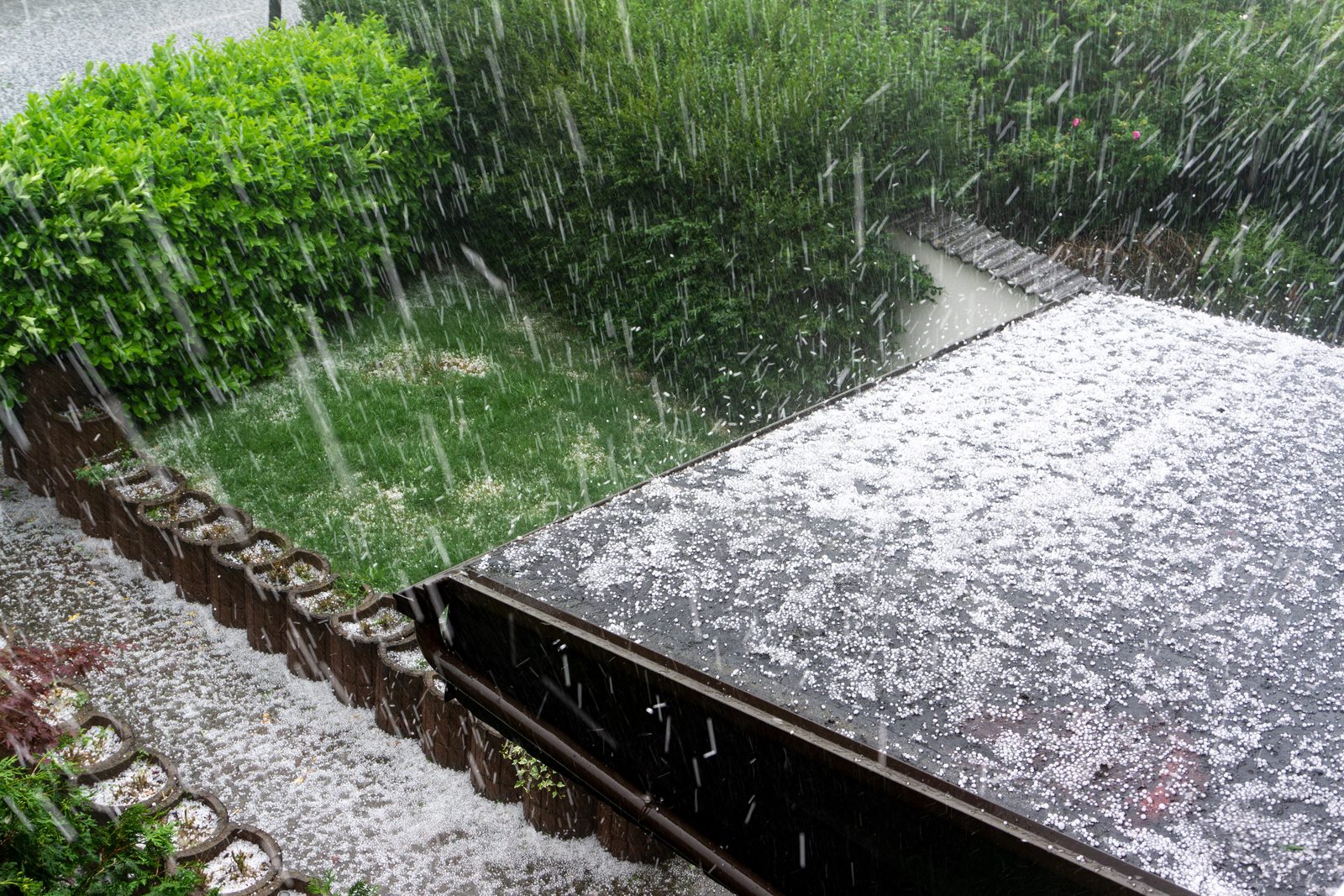
How Hail Damages a Commercial Flat Roof
Punctures and fractures
Large hailstones can puncture single-ply membranes or fracture brittle, aged surfaces. Older roofs are usually more vulnerable because the materials have lost flexibility.
Bruising and crushed insulation
Hail can compress the insulation board under the membrane even when the membrane surface looks intact. Crushed insulation can lead to membrane stress and ponding over time.
Seam and flashing damage
Impact near seams, edges, and flashings can open laps that were already weak. These can become leak paths in the next rain.
Damage to rooftop equipment
Hail can dent HVAC units, skylights, and vents. Damaged curbs and flashings around these penetrations need checking too.
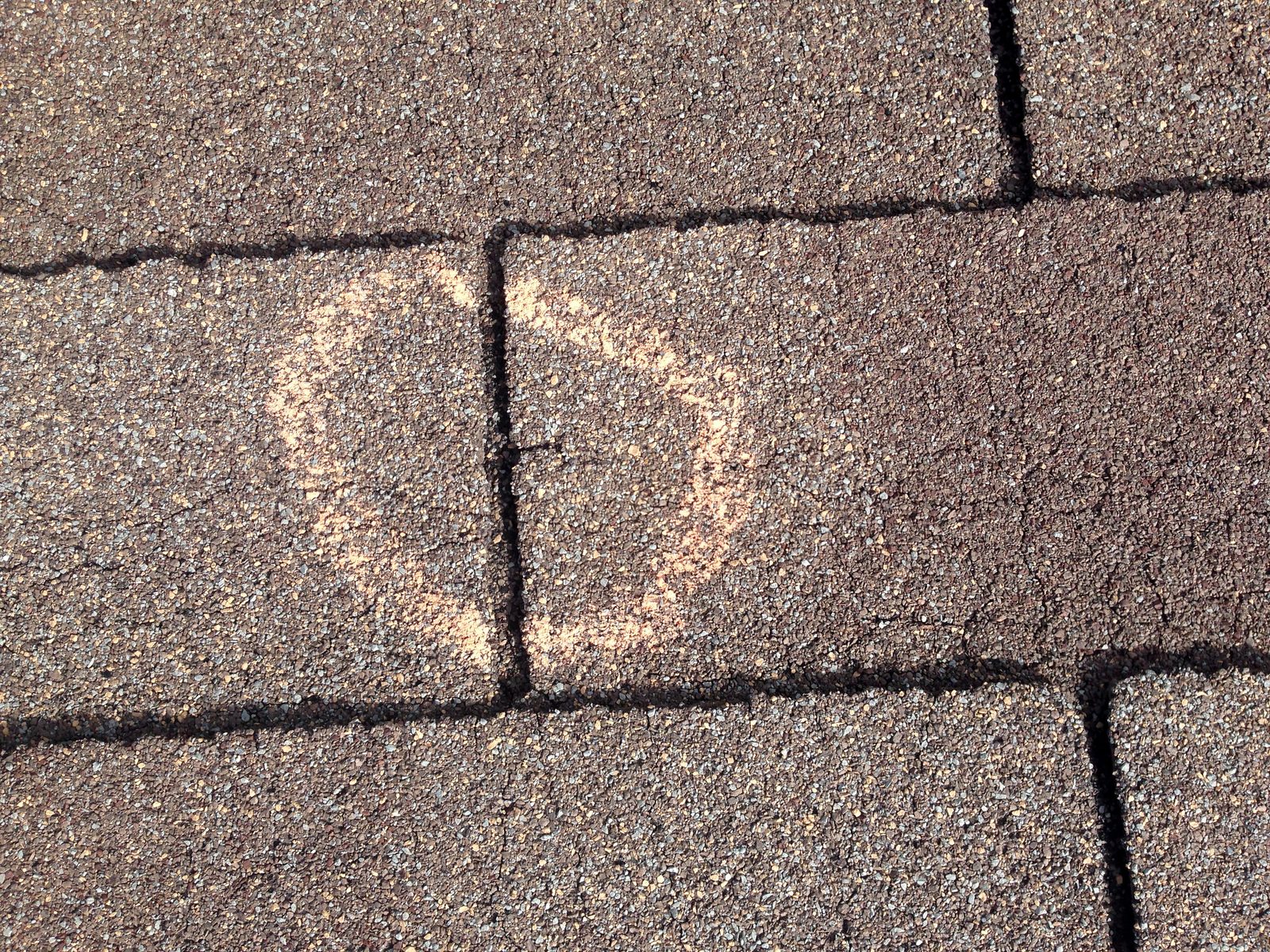
How UV Exposure Wears Down Roofing
Sunlight slowly breaks down many roofing surfaces. Common signs include:
- Chalking on EPDM and some coatings.
- Cracking or crazing on aged surfaces.
- Granule loss on modified bitumen cap sheets.
- Brittleness that makes membranes more prone to hail fractures.
A reflective, light-colored coating can act as a protective layer over the original membrane. The U.S. EPA notes that high solar reflectance is the most important characteristic for how well a cool roof reflects heat away from a building (EPA).
How Freeze-Thaw Cycles Cause Damage
Freeze-thaw damage happens when water gets into small openings and then freezes:
- Water enters a crack, open seam, or blister.
- It freezes overnight and expands.
- The opening grows a little each cycle.
- Eventually a small defect becomes a leak.
Ponding water makes this worse, because it keeps water sitting on the roof for longer. Snow and ice near drains and scuppers can also block drainage during melt.
Damage Checklist After a Colorado Storm
Use this list after significant hail or a hard freeze. Only walk a roof if it is safe and you have proper fall protection, or have a professional do it.
| Area | What to look for |
|---|---|
| Membrane field | Punctures, circular fractures, dents, exposed reinforcement |
| Seams | Open laps, split seam tape, lifted edges |
| Flashings and parapets | Cracks, separation, missing sealant |
| Drains and scuppers | Debris, ice, ponding |
| Rooftop units | Dented fins, damaged curbs |
| Interior | New stains, drips, or damp ceiling tiles |
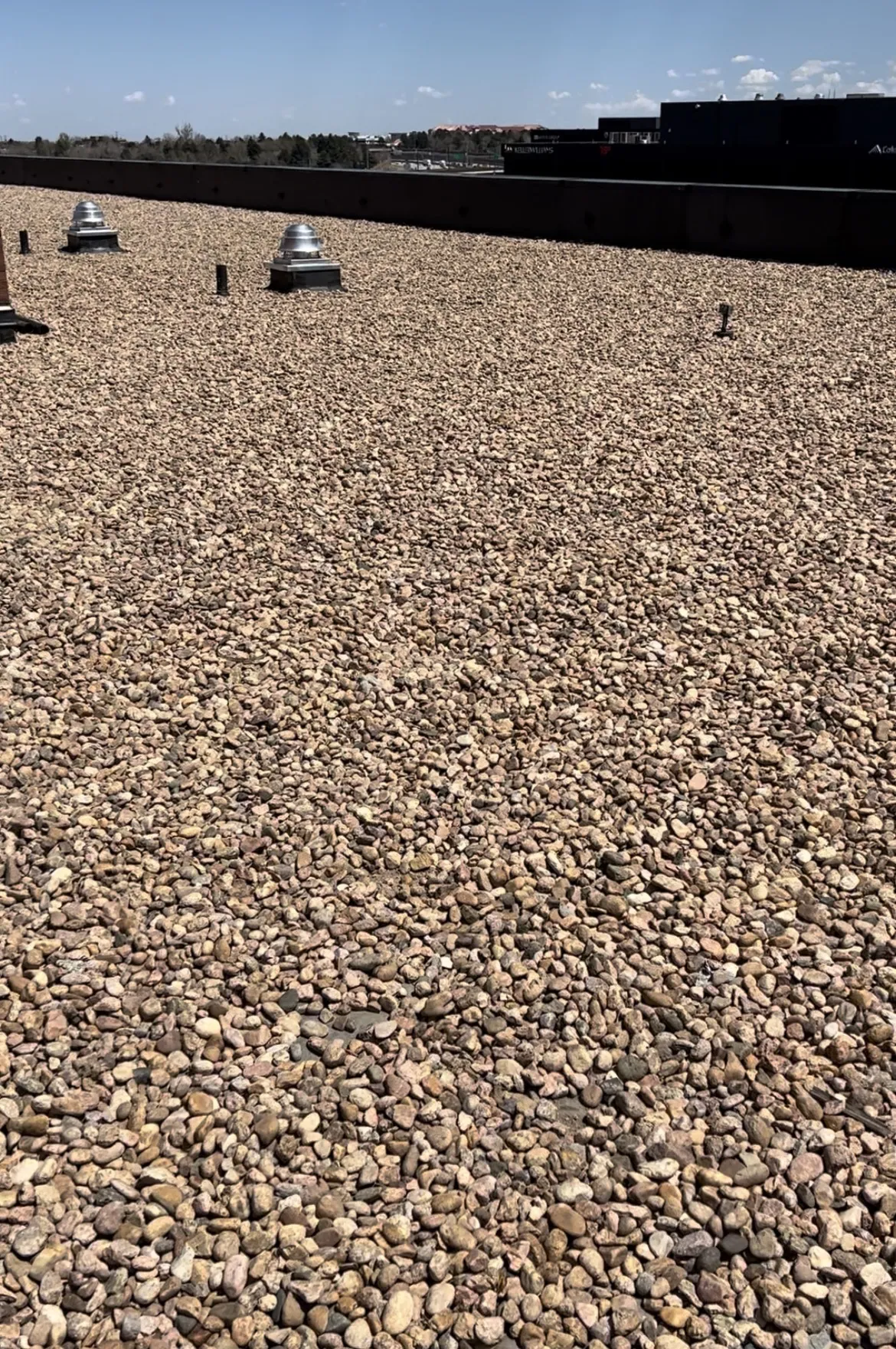
| Ballast or gravel areas | Displaced stones, exposed membrane |
For a fuller list, see our commercial roof inspection checklist.
How to Protect a Flat Roof in Colorado
- Schedule inspections in spring and fall, and after major hail. Our roof inspection service covers this.
- Repair small defects quickly so freeze-thaw does not widen them. See commercial roof repair.
- Fix drainage problems that cause ponding.
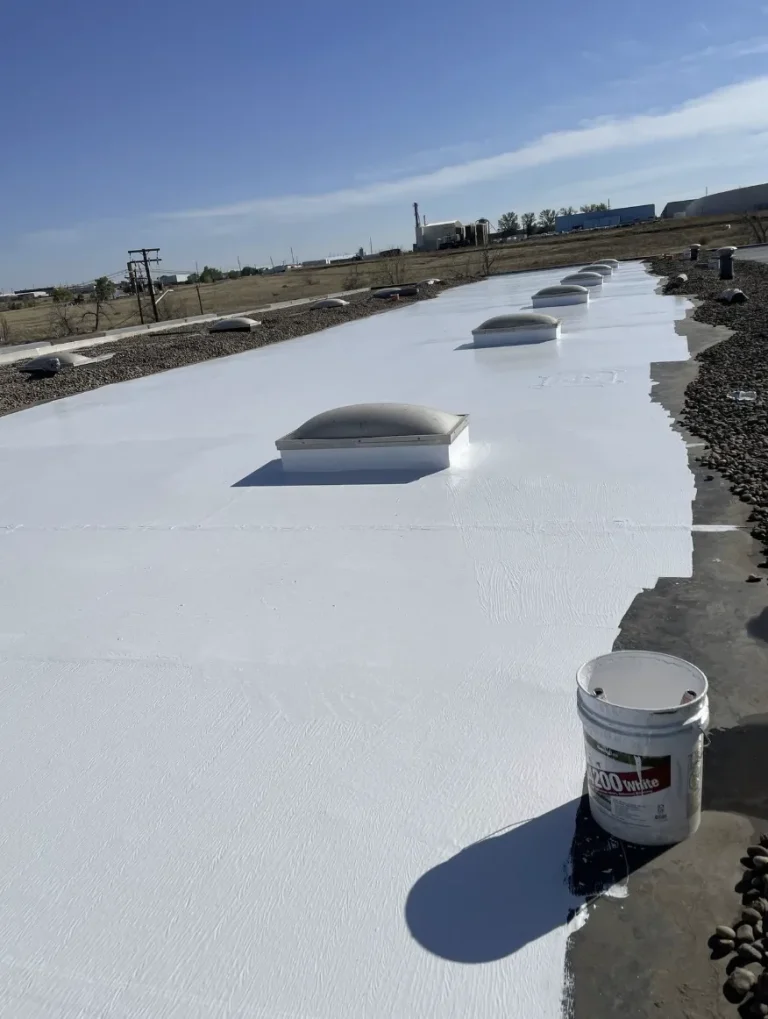
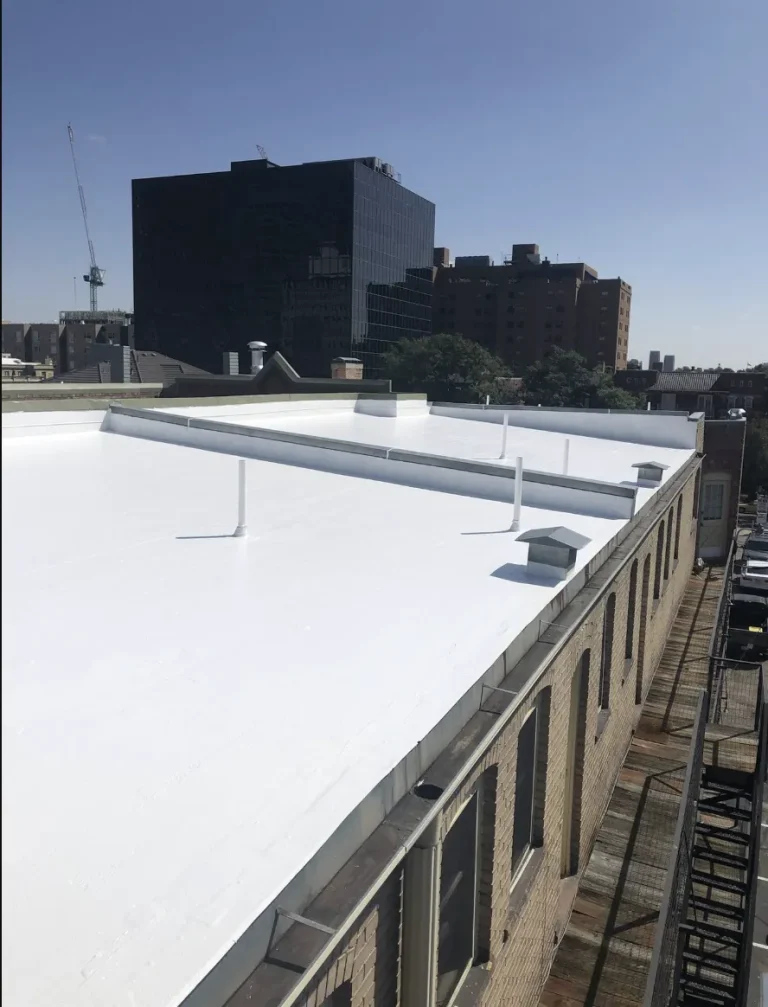
- Consider a restoration coating on a sound, aging roof to add a protective surface. Learn more about flat roof coating.
- Document everything with dated photos for insurance and maintenance records.
Whether Colorado Roof Coating Company assists with hail damage documentation for insurance: FACT NEEDED: CRCC insurance and storm documentation services – Lorem ipsum dolor sit amet.
Does a Coating Make a Roof Hail-Resistant?
No coating makes a roof hail-proof. Impact performance depends on the whole assembly: the coating thickness, reinforcement, the membrane underneath, and the insulation board. Some manufacturers test assemblies for impact resistance, so ask for the specific test results for the system proposed for your roof.
Building a Storm Response Plan
A simple storm plan helps your team act quickly when hail or a hard freeze hits:
- Assign a point person who is responsible for roof checks after storms.
- Record the storm date and approximate hail size from local reports.
- Check interiors first for new stains or drips, since that can be done safely right away.
- Call for a professional inspection before anyone walks a wet or icy roof.
- Photograph damage to rooftop equipment from the ground or safe access points.
- Make temporary repairs only with a qualified roofer to avoid voiding warranties.
- Keep all records together for insurance and maintenance planning.
Having this plan written down means fewer decisions under pressure and faster protection for the building.
Frequently Asked Questions
How do I know if hail damaged my flat roof?
Look for punctures, circular fractures, dented metal, and new interior stains. Bruised insulation is often invisible from the surface, so a professional inspection is the reliable way to know.
Should I inspect my roof after every hailstorm?
Inspect after any storm with significant hail, even if you see no leaks. Damage can take weeks or months to show up as a leak.
What does freeze-thaw do to a commercial roof?
Water enters small cracks and openings, freezes, and expands. Repeated cycles widen the defects until they leak.
Does UV damage flat roofs in Denver?
Yes. Denver’s elevation and sunny climate expose roofs to strong UV, which can chalk, crack, and embrittle membranes over time.
Can a roof coating help in Colorado’s climate?
A properly applied coating on a sound roof adds a reflective, protective surface against UV and seals minor surface defects. It does not replace repairs or fix structural problems.
The Bottom Line
Colorado hail damage, strong UV, and freeze-thaw cycles combine to wear down flat roofs quickly. Regular inspections, fast repairs, and protective coatings on sound roofs are the best defense.
Had a recent storm? Schedule a Free Roof Assessment and we will check for hail, UV, and freeze-thaw damage. We work across Denver, Colorado Springs, and the rest of the state.
Cited Sources
- NOAA National Severe Storms Laboratory, “Severe Weather 101: Hail”: https://www.nssl.noaa.gov/education/svrwx101/hail/
- Insurance Information Institute, “Facts + Statistics: Hail”: https://www.iii.org/fact-statistic/facts-statistics-hail
- U.S. Environmental Protection Agency, “Using Cool Roofs to Reduce Heat Islands”: https://www.epa.gov/heatislands/using-cool-roofs-reduce-heat-islands
- Colorado Climate Center, Colorado State University: https://climate.colostate.edu/