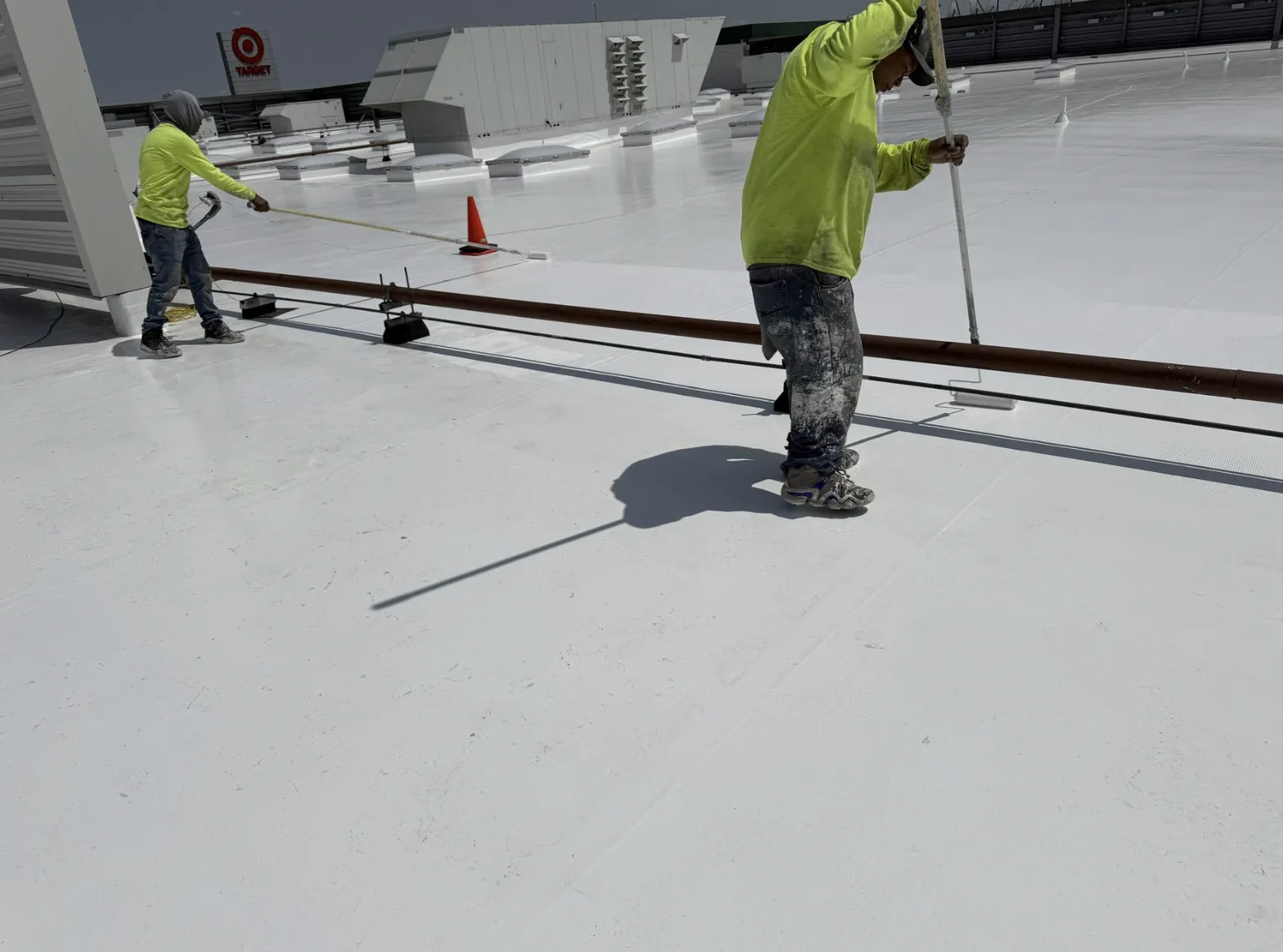
Roof coating vs replacement comes down to one question: is the existing roof still sound enough to restore? If the deck is solid, the insulation is mostly dry, and the membrane is worn but intact, a fluid-applied coating can restore the surface without a tear-off. If the roof is saturated, structurally damaged, or past repair, replacement is usually the right call.
This guide walks commercial flat roof owners and property managers in Colorado through the factors that actually drive that decision, so you can have a clearer conversation with any contractor, including us.
What Is the Difference Between Roof Coating and Roof Replacement?
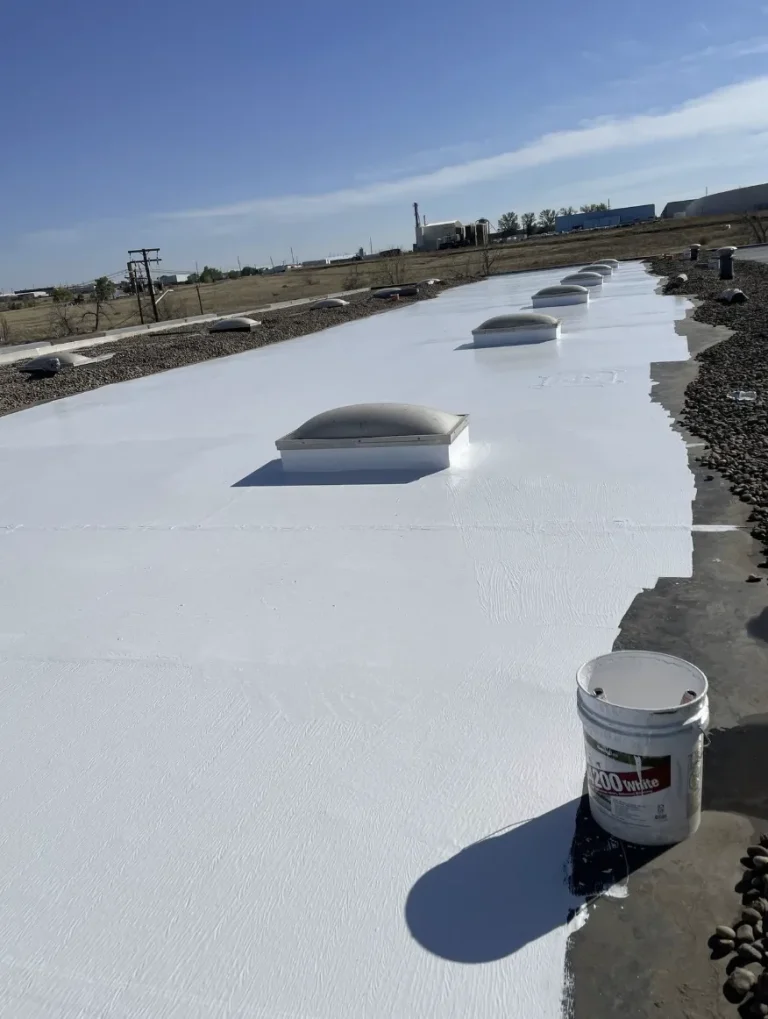
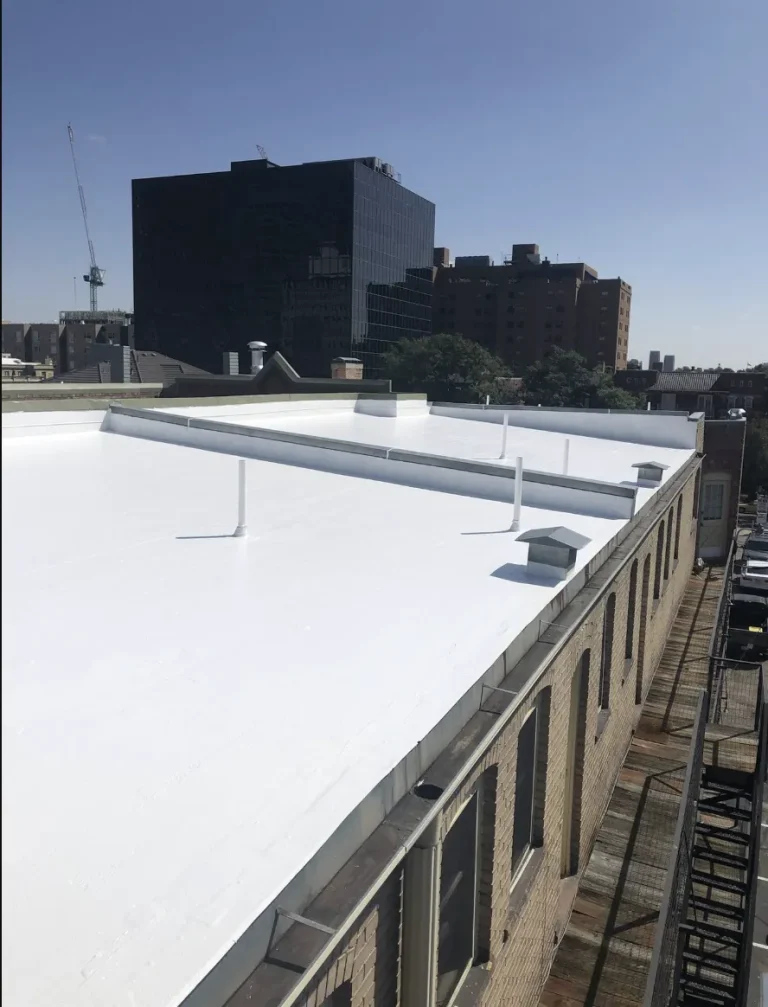
A roof coating is a liquid-applied layer, commonly acrylic, silicone, or urethane, that is rolled or sprayed over a prepared existing roof. It cures into a seamless, monolithic membrane that protects the original roof from UV exposure and water.
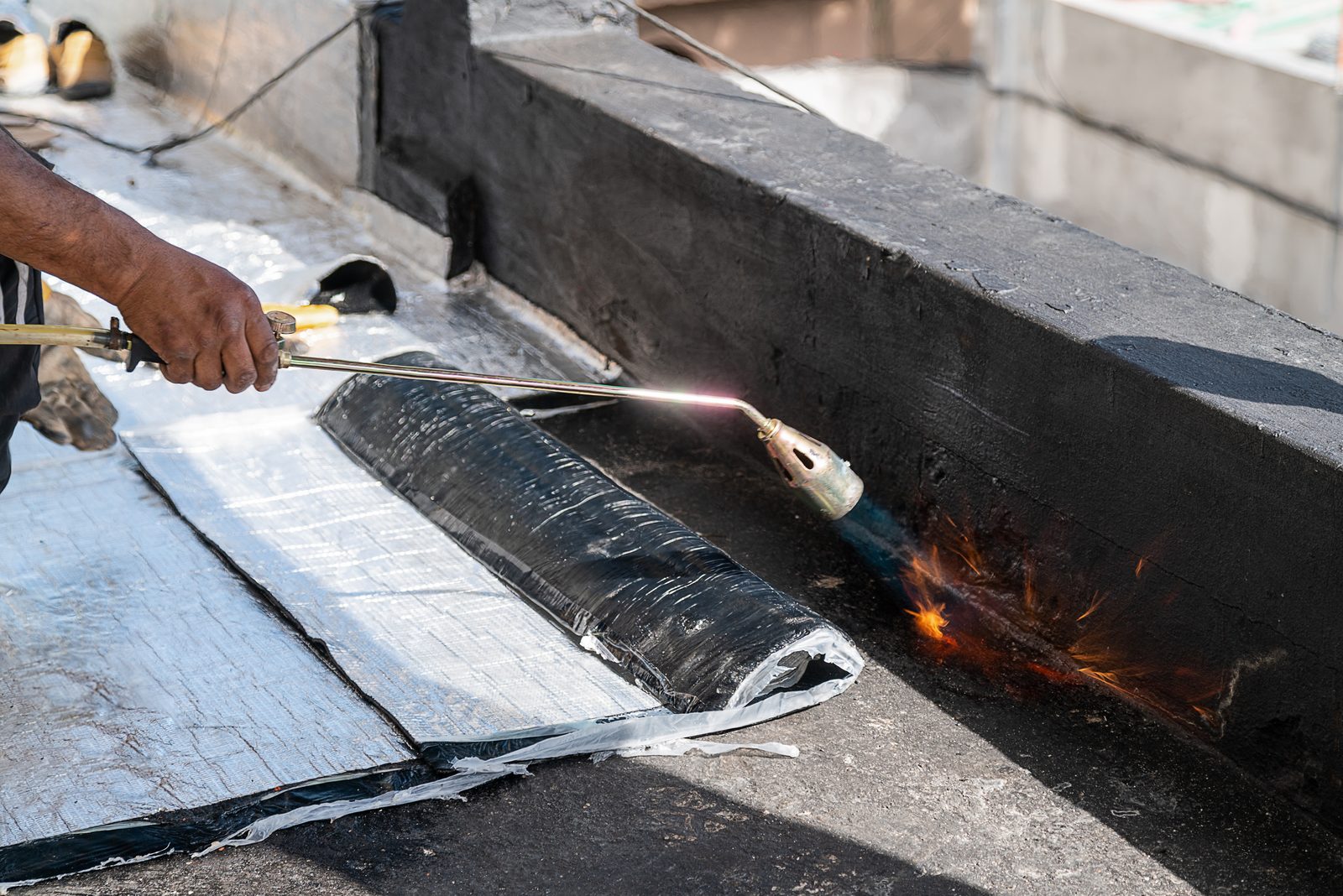
A roof replacement removes some or all of the existing roof system down to the deck, then installs new insulation and a new membrane such as TPO, EPDM, or modified bitumen.
| Factor | Roof Coating (Restoration) | Roof Replacement |
|---|---|---|
| Existing roof | Stays in place and is repaired, cleaned, primed, and coated | Removed (tear-off) or overlaid |
| Disruption | Typically less noise, debris, and rooftop traffic | Heavier equipment, debris, and staging |
| Waste | Little landfill waste from the old roof | Old roofing materials are hauled away |
| Best fit | Sound roofs with surface wear and limited wet insulation | Saturated, failing, or structurally compromised roofs |
| Future options | Can often be recoated at the end of its service life (per manufacturer) | Starts a new roof life cycle |
When Does a Roof Coating Make Sense?
Restoration is usually worth evaluating when most of these are true:
- The roof deck is structurally sound.
- Moisture surveys show limited wet insulation that can be removed and replaced in sections.
- Leaks are isolated, not widespread.
- The membrane is aging, chalking, cracking on the surface, or losing granules, but is still adhered or attached.
- Seams, flashings, and penetrations can be repaired before coating.
Coatings are not a cure for a failed roof. A responsible contractor should tell you when a roof is not a coating candidate. You can read how we approach that assessment on our commercial roof restoration page.
When Is Replacement the Better Choice?
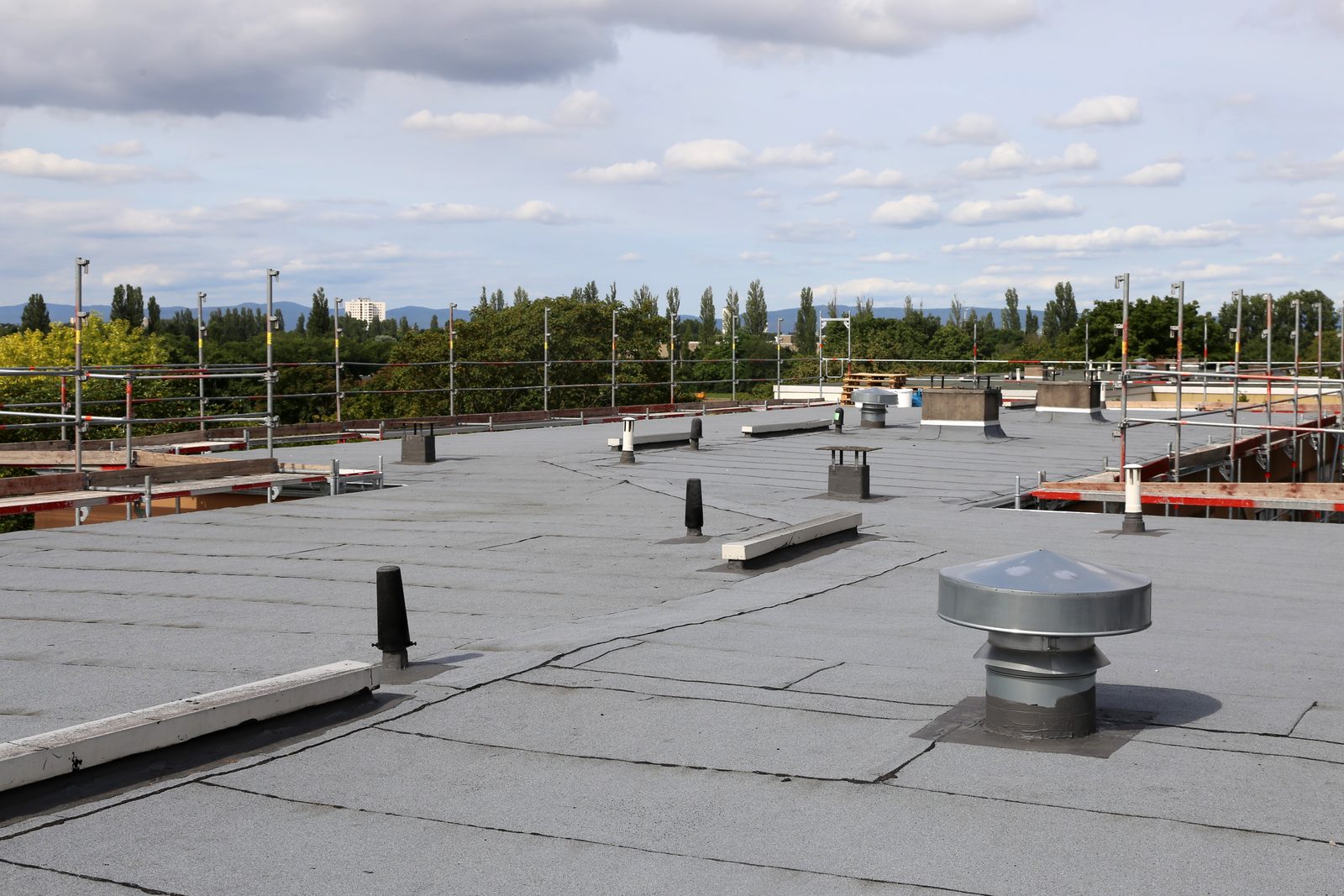
Replacement is usually the better path when:
- Large areas of insulation are wet. Coating over saturated insulation traps moisture.
- The deck is rusted, rotted, or deflecting.
- The membrane is delaminating, shrinking away from walls, or splitting across wide areas.
- The building already has the maximum number of roof layers allowed by local code.
- The structure has a planned change, such as new rooftop units, that requires deck work anyway.
What Drives the Cost of Each Option?
We do not publish a price per square foot here, because real numbers depend on the roof you have. What we can do is explain the variables that move a quote up or down.
Cost drivers for roof coating
- Prep work: power washing, removing loose material, and treating chalked or oxidized surfaces.
- Repairs before coating: seam reinforcement, flashing repair, and replacing wet insulation sections.
- Coating chemistry and thickness: acrylic, silicone, and urethane differ in material cost, and thicker applications use more product.
- Primer needs: some membranes, such as aged EPDM or bitumen, often need a primer for adhesion.
- Access and logistics: roof height, hoisting, and how many rooftop units you have.
Cost drivers for replacement
- Tear-off and disposal: labor, dumpsters, and landfill fees.
- New insulation: thickness may need to meet current energy code.
- Membrane selection: TPO, EPDM, PVC, or modified bitumen.
- Deck repairs discovered once the old roof is removed.
- Business disruption: interior protection, noise, and scheduling around tenants.
Coating can also be a way to manage capital planning, since it may be treated differently than a full replacement for budgeting and tax purposes. That is a question for your accountant, not a roofer, so please confirm with a tax professional before you assume any treatment.
How Colorado Conditions Affect the Decision
Denver, Colorado Springs, and the rest of the Front Range put flat roofs through intense sun, wide temperature swings, and hail. NOAA’s National Severe Storms Laboratory notes that Nebraska, Colorado, and Wyoming usually have the most hailstorms, and that the “hail alley” where they meet averages seven to nine hail days per year (NOAA NSSL).
That matters in two ways:
- Hail damage can change the answer. A roof that looked like a coating candidate in spring may have new punctures or bruised insulation after a storm. Get an inspection after significant hail.
- UV exposure ages unprotected membranes. A reflective coating adds a sacrificial, light-colored surface. The U.S. EPA explains that buildings with cool roofs use less air conditioning and have more comfortable indoor temperatures (EPA).
For more on climate stress, see our guide to how Colorado hail, UV, and freeze-thaw affect flat roofs.
A Simple Decision Framework
Use these steps to move from guesswork to a clear decision:
- Get a moisture survey. Infrared or core samples show how much insulation is wet.
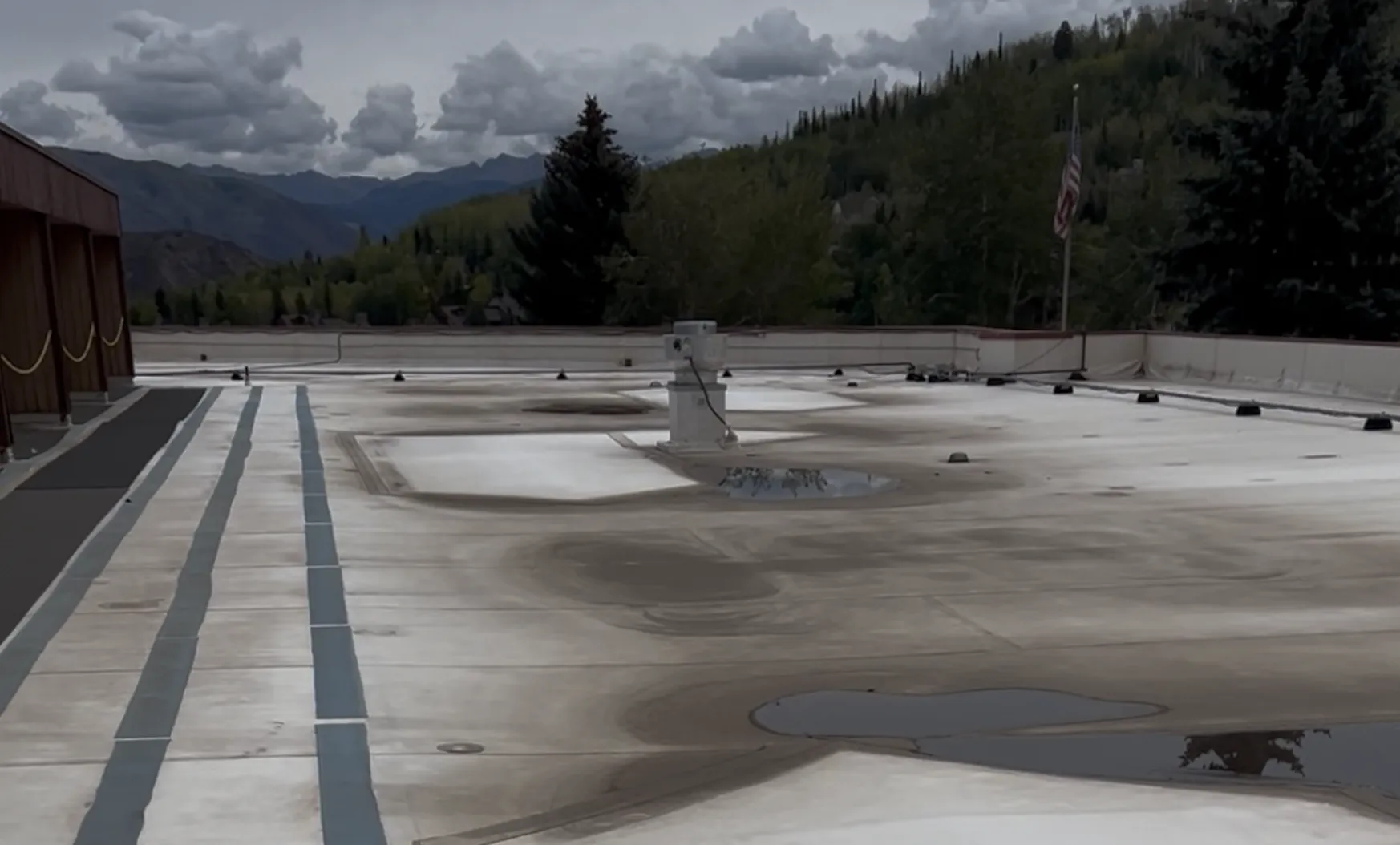
- Document the membrane condition. Photos of seams, flashings, drains, and penetrations.
- Check code and layer count with your contractor and local building department.
- Ask for both options priced when the roof is borderline, so you can compare on the same scope.
- Compare warranty terms in writing. Coating and membrane warranties vary by manufacturer and system thickness.
- Plan the maintenance path. Ask what inspection schedule keeps either option in warranty.
At Colorado Roof Coating Company, our warranty options are: FACT NEEDED: CRCC warranty terms – Lorem ipsum dolor sit amet, consectetur adipiscing elit.
Common Mistakes to Avoid
- Coating over wet insulation. It can trap moisture and shorten the life of the system.
- Skipping adhesion tests. Coating manufacturers commonly recommend testing adhesion on the actual roof surface before full application.
- Comparing quotes with different scopes. One bid may include seam repairs and primer while another does not.
- Ignoring drainage. Persistent ponding water should be addressed, and some coatings handle ponding better than others.
Frequently Asked Questions
Is a roof coating cheaper than a roof replacement?
In many cases restoration costs less than a full tear-off because the existing roof stays in place and less material goes to the landfill. The actual difference depends on prep, repairs, coating type, and roof condition, so compare written quotes on the same roof.
How do I know if my flat roof can be coated?
A professional assessment with a moisture survey is the only reliable way. Generally, a sound deck, mostly dry insulation, and a membrane that is worn but intact point toward coating.
Can you coat a roof that leaks?
Often yes, if the leaks are isolated and repaired first and the wet insulation around them is replaced. Widespread leaking usually signals replacement.
How long does a commercial roof coating last?
Service life depends on the coating chemistry, thickness, and maintenance, and manufacturers publish their own warranty terms. Ask for the manufacturer’s written warranty and the thickness it requires.
Does coating a roof help with energy costs?
Reflective coatings can reduce heat gain. The EPA notes that cool roofs reduce air conditioning use, though savings vary by building, insulation, and climate.
The Bottom Line
The best choice between roof coating vs replacement depends on what is under the surface, not just how the roof looks. Start with a moisture survey and an honest assessment, then compare both options on the same scope.
Ready for a clear answer on your roof? Schedule a Free Roof Assessment and we will tell you whether your roof is a restoration candidate or not. You can also learn more about our flat roof coating services.
Cited Sources
- NOAA National Severe Storms Laboratory, “Severe Weather 101: Hail”: https://www.nssl.noaa.gov/education/svrwx101/hail/
- U.S. Environmental Protection Agency, “Using Cool Roofs to Reduce Heat Islands”: https://www.epa.gov/heatislands/using-cool-roofs-reduce-heat-islands
- Roof Coatings Manufacturers Association (RCMA): https://www.roofcoatings.org/